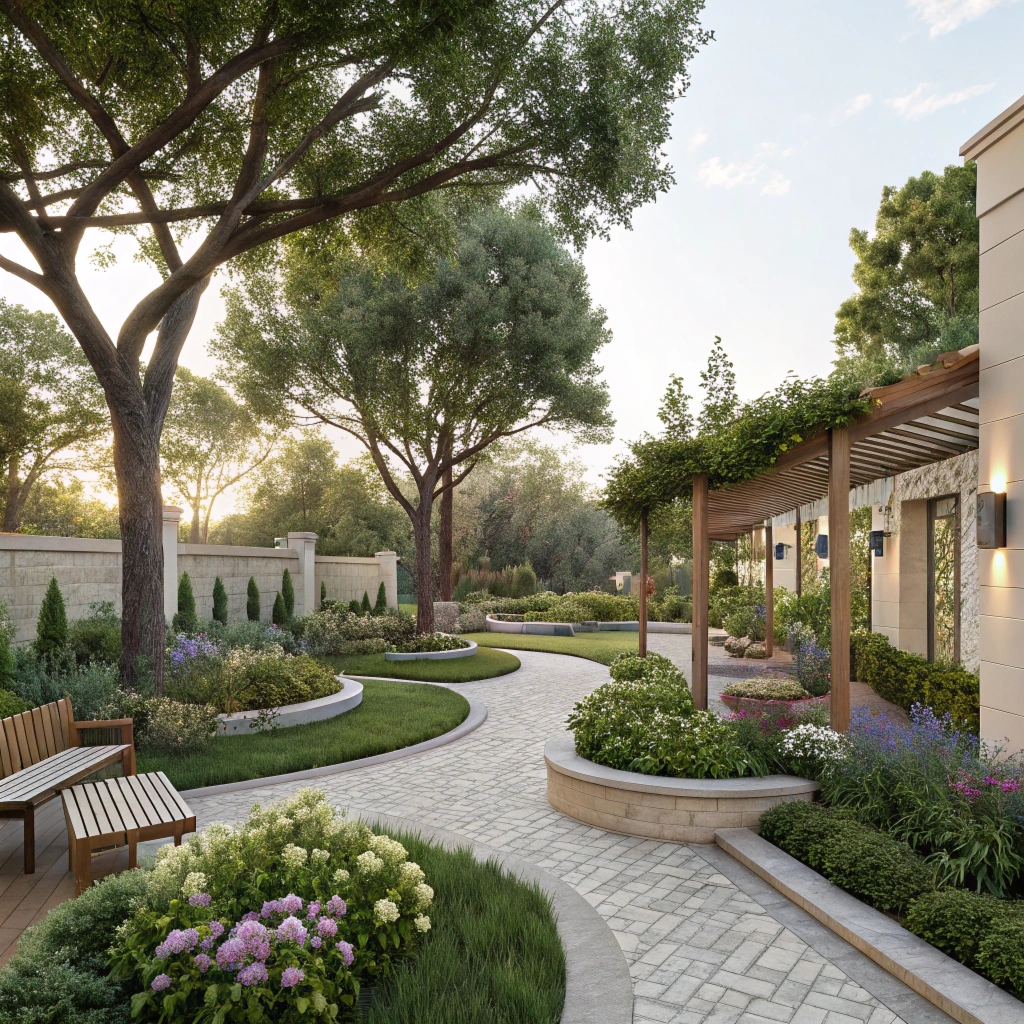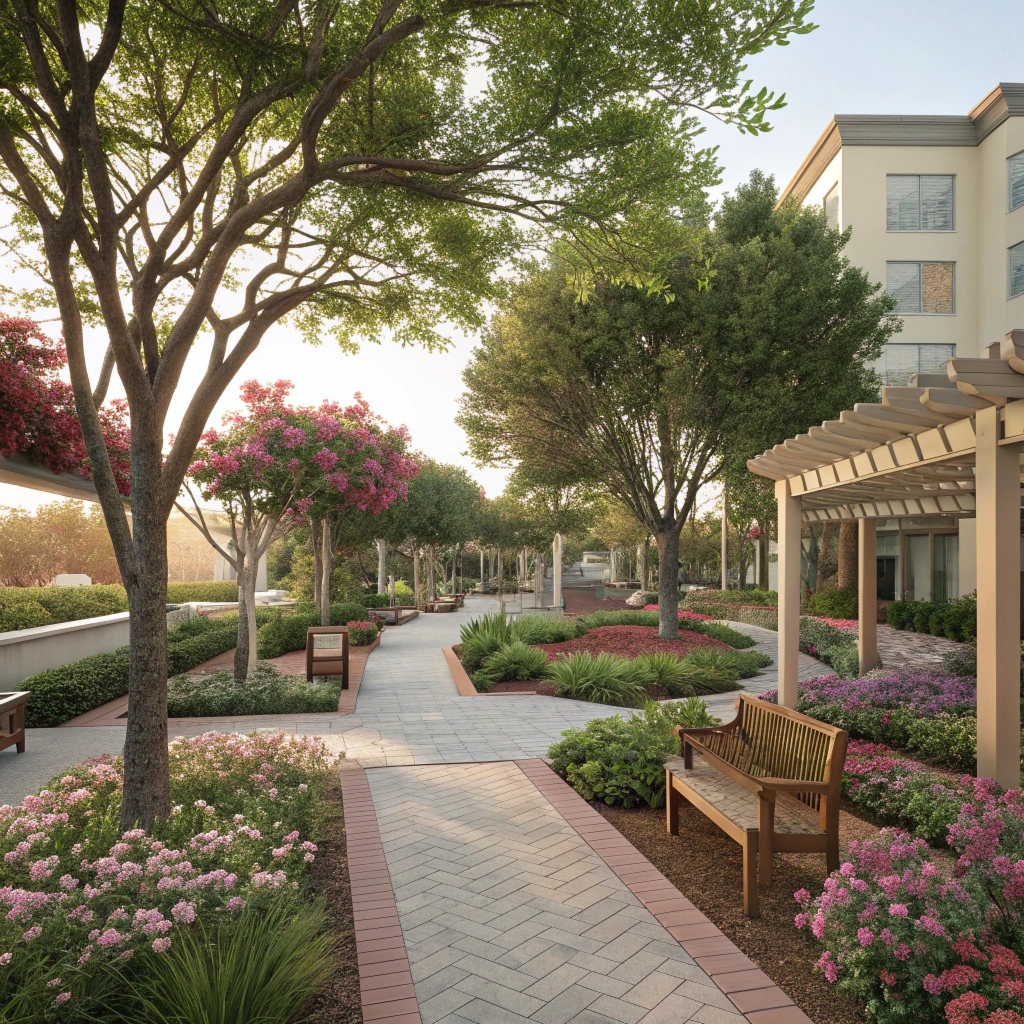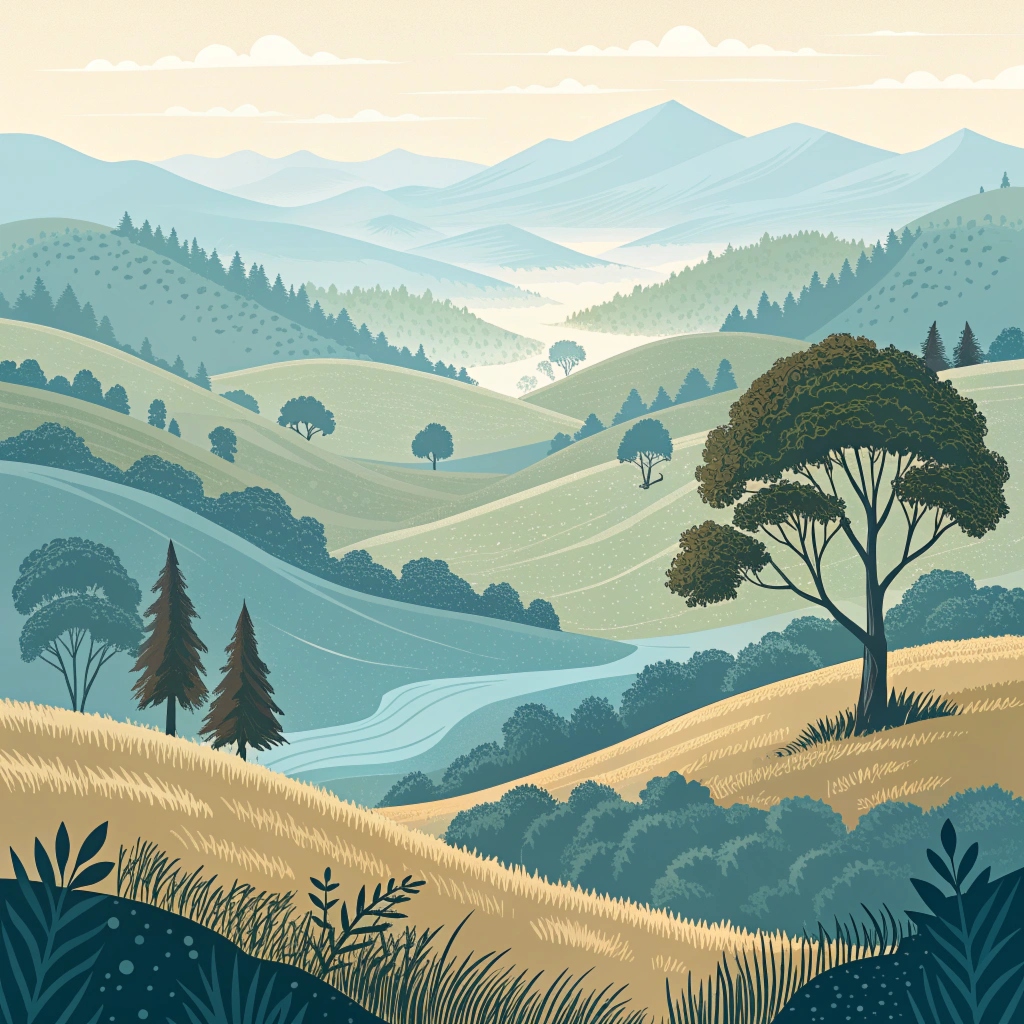
Terrain Composition
Working with existing landforms to create natural flow and elevation changes. We study the site's topography, identifying opportunities to enhance natural contours or create subtle modifications that guide movement and define spaces.
Elevation changes can create visual interest, improve drainage, and define distinct areas within a landscape. Rather than flattening sites, we work with existing slopes and contours to create spatial rhythm.
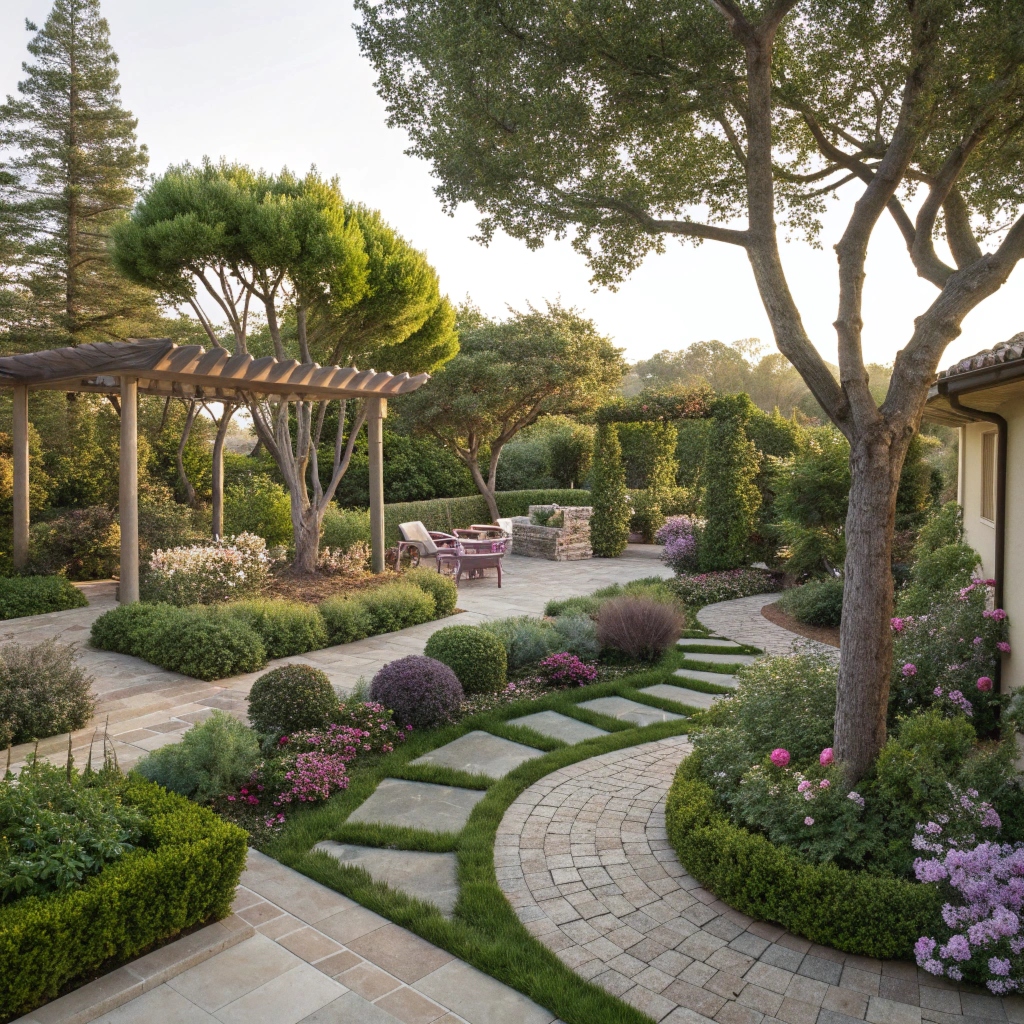
Zoning Strategy
Defining distinct areas for different functions while maintaining visual and physical connections. Each zone serves a specific purpose while remaining part of a cohesive whole.
Transitions between zones are handled through material changes, planting shifts, or subtle elevation differences rather than hard boundaries. This creates a sense of flow while providing clear spatial definition.

Material Layers
Selecting surfaces and textures that respond to local conditions and create tactile experiences. Materials are chosen for their relationship to the site's geology and their performance over time.
We consider how materials feel underfoot, how they respond to weather, and how they age. The material palette remains restrained, allowing natural variation to provide visual interest.
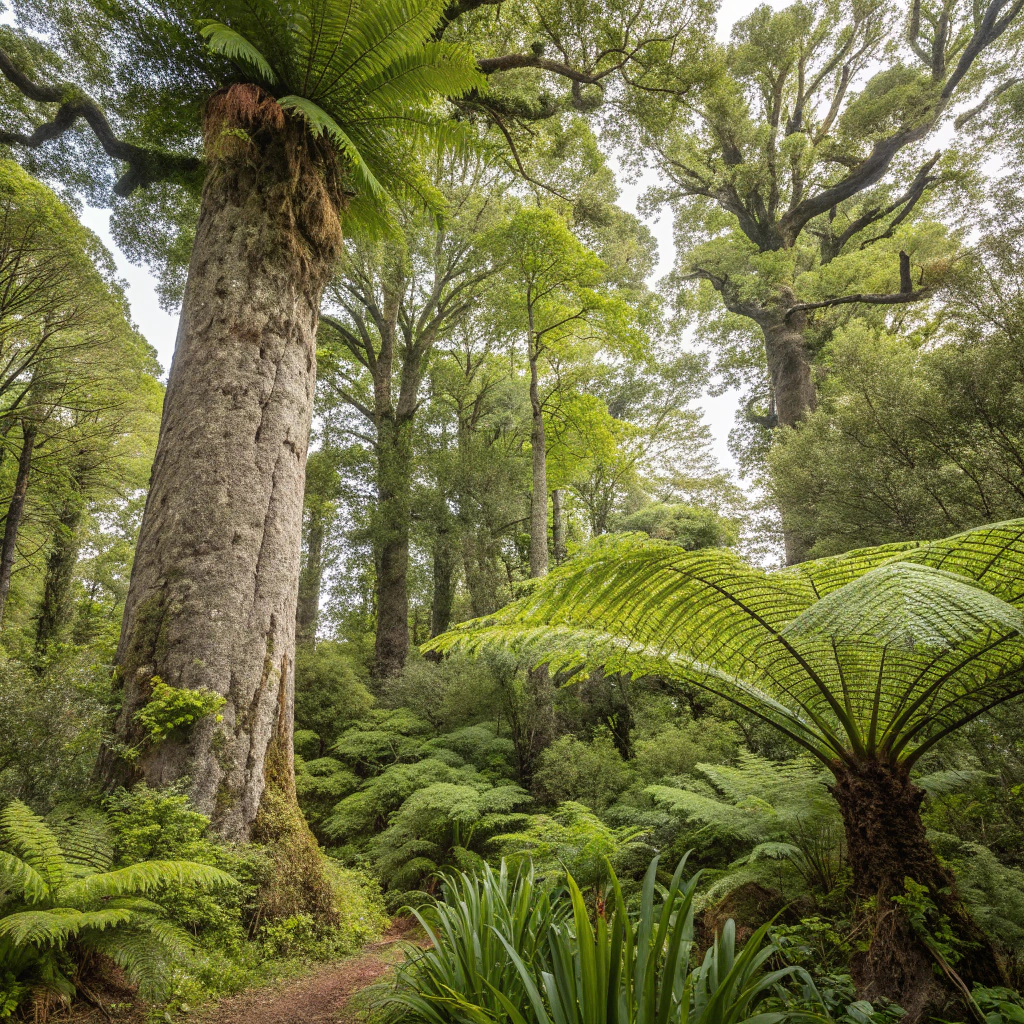
Plant Relationships
Composing plant communities that reflect natural associations and create seasonal interest. Plants are selected for how they relate to each other visually and ecologically.
We consider growth patterns over time, seasonal changes, and the way different species interact. This creates landscapes that feel natural and develop gracefully as plants mature.