Design Philosophy
Landscape design operates at the scale of human experience and ecological time. We approach each project as a conversation between the existing character of a place and the potential for thoughtful intervention.
Context as Foundation
Every site carries its own history, geology, and ecological relationships. Understanding these elements forms the foundation of our design process. We study soil composition, drainage patterns, existing vegetation, and the way light moves across the land throughout the day and across seasons.
This understanding informs not only what we propose but also what we choose not to change. Some areas of a site may be best left to develop naturally, while others benefit from clear spatial definition or material intervention.
Material Honesty
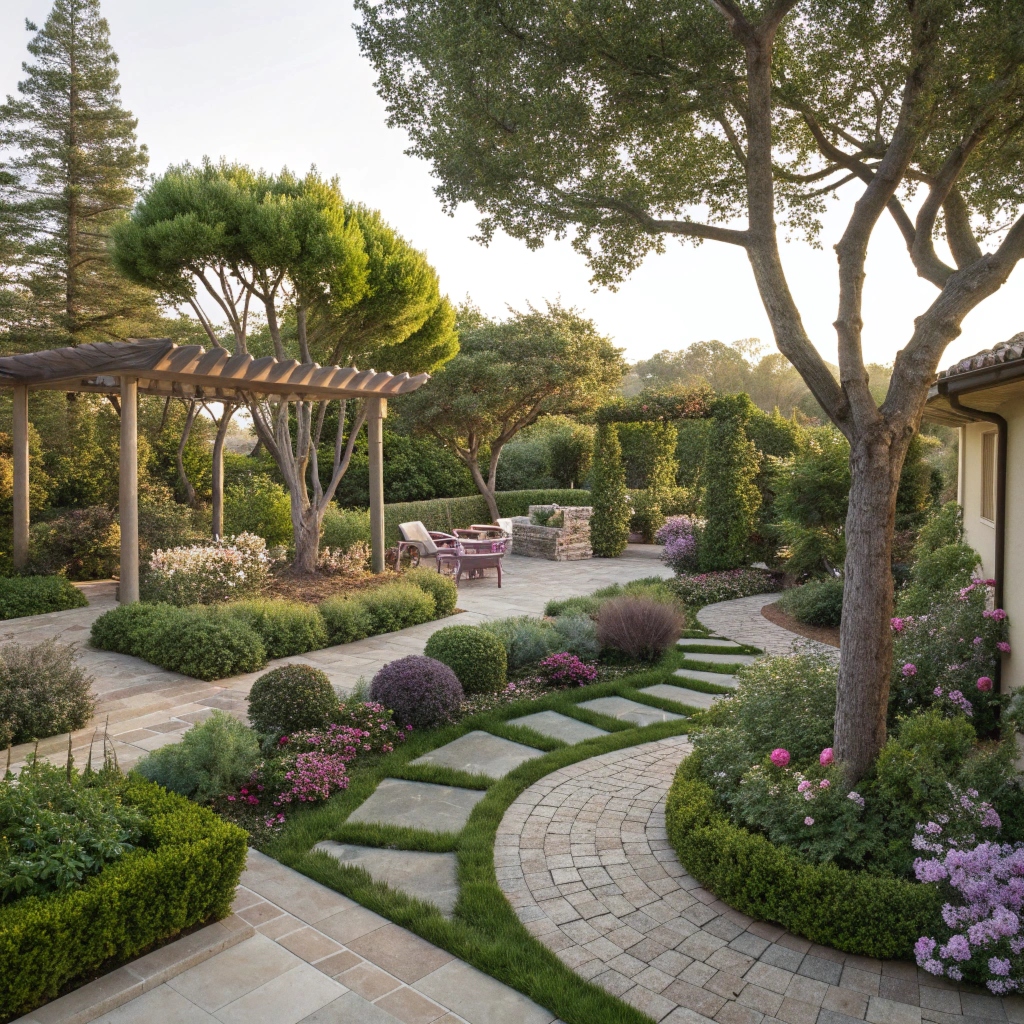
Materials should speak to their origin and function. We select surfaces that reflect local geology and respond to climate conditions. Stone, timber, and earth-based materials age in ways that integrate with the natural environment rather than standing apart from it.
Texture becomes a primary design element, creating tactile experiences that change with weather and time. Surfaces are chosen for how they feel underfoot, how they respond to moisture, and how they reflect or absorb light.
Spatial Flow
Outdoor spaces should guide movement naturally, like paths through terrain. We consider how people will move through a landscape, where they might pause, and what views they will encounter along the way. This creates a sense of discovery and spatial rhythm.
Boundaries between different areas are defined through subtle changes in elevation, material, or planting rather than rigid barriers. This creates a sense of flow while still providing clear spatial definition.
Plant Relationships
Plants are selected not only for their individual characteristics but for how they relate to each other and to the broader ecological context. We consider natural plant associations, growth patterns over time, and the way different species interact visually and ecologically.
Seasonal change becomes an integral part of the design, with compositions that provide structure in winter and dynamic transformation through spring, summer, and autumn. This creates landscapes that feel alive and responsive to natural cycles.
Temporal Thinking
Landscapes develop over years and decades. We design with this temporal dimension in mind, considering how plantings will mature, how materials will weather, and how the relationship between built and natural elements will evolve.
This long-term perspective informs initial decisions about plant spacing, material selection, and spatial organization. The goal is to create landscapes that improve with age rather than requiring constant intervention.
Restraint and Clarity
Effective landscape design requires restraint. We work with a limited material palette and plant selection, allowing natural variation and weathering to provide visual interest. This creates spaces that feel calm and intentional rather than busy or decorative.
Each element serves a clear purpose, whether functional or aesthetic. Nothing is added without consideration of its contribution to the overall composition and its relationship to the natural context.