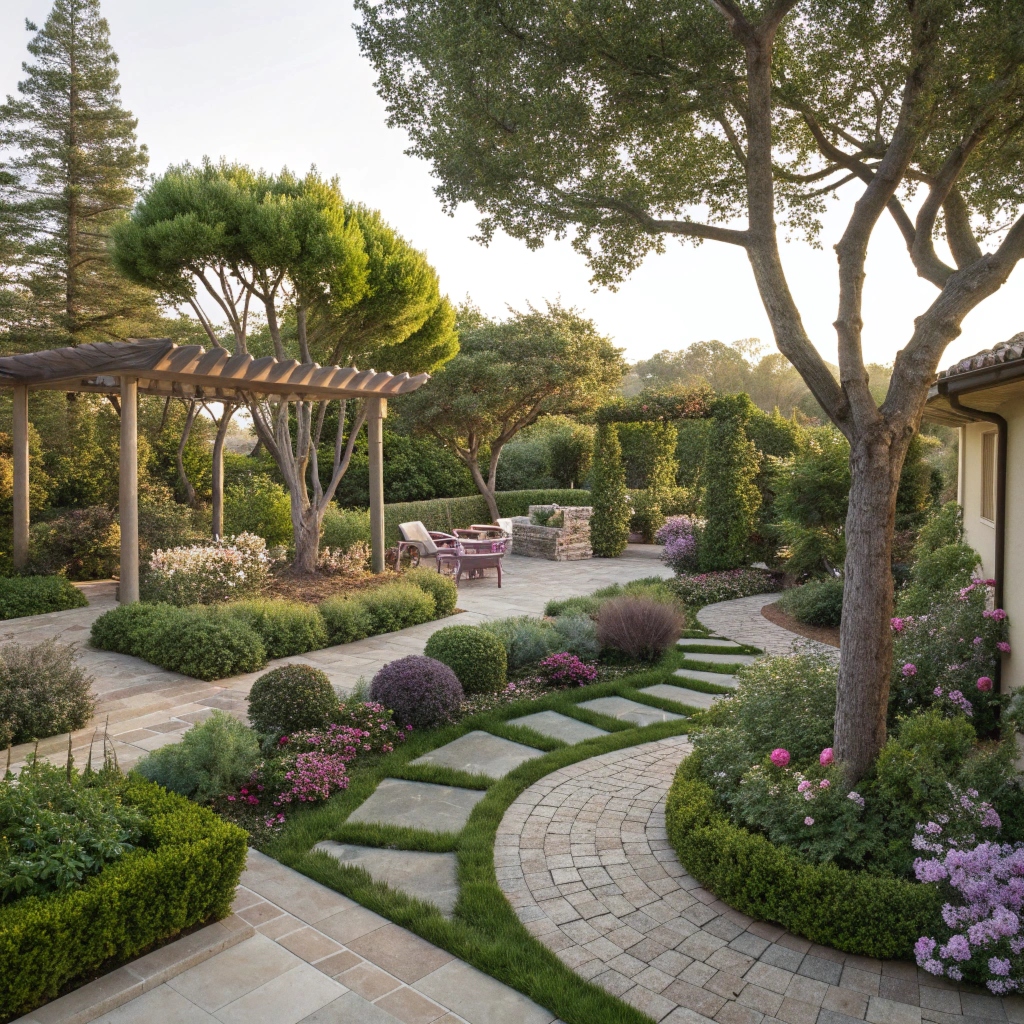
Our design process unfolds through distinct phases, each building on the understanding developed in previous stages.
Initial Consultation
We begin with a conversation about your outdoor space, its current state, and your vision for how it might develop. This initial discussion helps us understand the context and potential of the site.
We discuss how you currently use the space, what functions you hope it will serve, and any constraints or opportunities that exist. This conversation informs our approach to the site assessment.
Site Assessment
We conduct a thorough assessment of the site, studying terrain, existing vegetation, soil conditions, drainage patterns, and microclimates. We document how light moves across the site throughout the day and across seasons.
This assessment includes understanding the relationship between interior and exterior spaces, existing pathways and circulation patterns, and the broader context of the surrounding landscape.
Concept Development
Based on our understanding of the site and your vision, we develop spatial concepts that respond to the natural character of the place. These concepts explore different approaches to organizing outdoor spaces.
We consider terrain composition, zoning strategies, material possibilities, and plant relationships. Concepts are presented through diagrams and discussions, allowing for refinement before detailed development.
Design Development
Once a concept direction is established, we develop the design in detail. This includes specific material selections, plant palettes, and spatial organization. We consider how the design will develop over time.
Design development includes considering construction details, material specifications, and plant selection. We ensure that all elements work together to create a cohesive landscape composition.
Documentation
We prepare detailed design documentation including plans, sections, material specifications, and plant schedules. Documentation provides clear guidance for implementation while remaining flexible enough to respond to site conditions.
Documentation includes detailed drawings of key areas, material specifications with sources, and plant lists with spacing and size information. This ensures that the design intent is clearly communicated.
Ongoing Dialogue
Throughout the process, we maintain an ongoing dialogue about the design, responding to questions and refining details as needed. This collaborative approach ensures that the final design reflects both our design expertise and your vision for the space.
We are available to discuss the design as it develops and to answer questions about materials, plants, and spatial organization. This dialogue continues through the documentation phase.